Alps Branded Residences: Six Senses, The Chedi and the Quiet Branding of the Mountains
branded.homes Editorial
Market Intelligence
Share
The Alps were the last great luxury market without branded residences. Six Senses in Courchevel and Crans-Montana, The Chedi in permit-free Andermatt and Hard Rock in Davos explain what has changed, what it costs and what the catches are.
Why the Last Great Luxury Market Resisted Branding
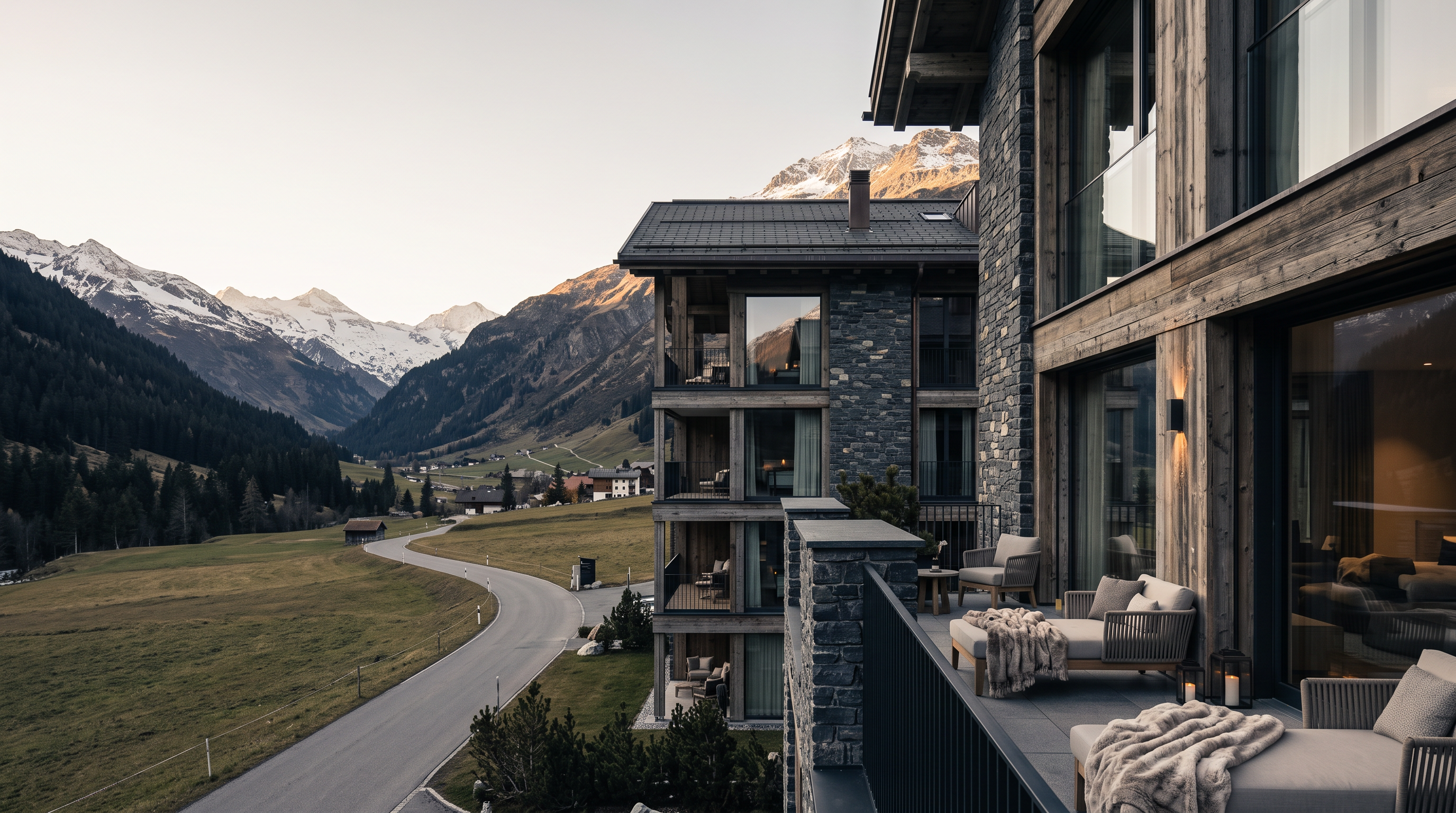
The Alps hold some of the deepest pockets of luxury property demand in the world, and until a few years ago almost none of it was branded. While Dubai, Miami and Marbella filled skylines with hotel-flagged homes, the great ski resorts stayed loyal to the private chalet. The reasons are structural. Land in Courchevel 1850, Verbier or St. Moritz is scarce, family-held and tightly zoned. Swiss law rations foreign purchases through the Lex Koller quota system. And the building season at altitude is short enough to unsettle operators used to year-round construction schedules.
The result was a paradox: the world's most expensive resort property market was, for decades, essentially a branded-residences-free zone. The last broad international ski benchmark put prime Courchevel 1850 at roughly €33,000 per square metre on average, and a typical six-bedroom chalet there renting for around €100,000 a week in peak season. All of that value was built and traded without hotel flags. The quiet change of the past five years is that branding has finally arrived, on mountain terms.
The Three Models Now on the Mountain
The managed residence: Six Senses Residences Courchevel
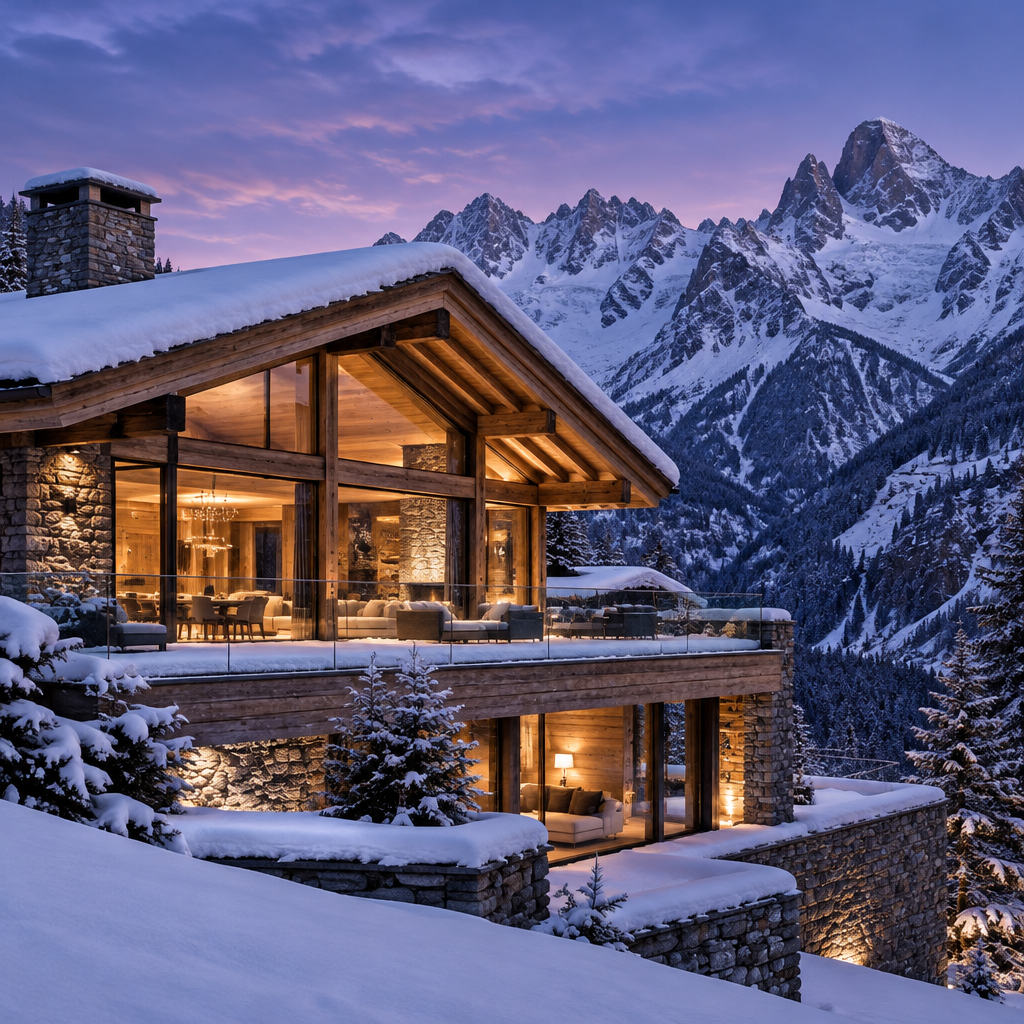
The proof of concept sits in the heart of 1850 itself. Six Senses Residences Courchevel, a roughly 53-home development delivered with the backing of Promocour 1850 and investors including Cain Hoy, sold its apartments and penthouses at launch from about €1.5 million to just under €10 million, with hotel-grade management layered over private ownership. It was not a one-off: the brand runs a second, smaller scheme of about 25 apartments lower down the mountain at Courchevel 1550, giving the resort something it never had before: a branded inventory at more than one price point.
The Swiss premium: Crans-Montana, Verbier and the non-Swiss problem
Switzerland illustrates the constraint that shaped the whole market. Lex Koller restricts foreign buyers in most holiday areas, and the quotas are small: Zermatt has effectively issued no new purchase permits to foreigners in decades. That is precisely why the branded schemes that did get built stand out. At Six Senses Crans-Montana, 17 fully serviced residences launched at roughly CHF 7.8 million for a 220-square-metre two-bedroom to about CHF 13.3 million for a 350-square-metre five-bed duplex, with most units open to non-Swiss buyers under the resort's quota. In Verbier, the 15 W-branded residences attached to the W hotel remain one of the few branded footholds in a village where prime property trades around €28,600 per square metre, according to a major international advisory firm's alpine research.
The exception: Andermatt and The Chedi
Andermatt is the most instructive case in the Alps. The master resort built there over the past decade carries a rare exemption: within the designated holiday zone, foreign buyers can purchase without a permit and even through a company, something the rest of Switzerland generally forbids. At its centre stands The Chedi Andermatt, whose branded residences and serviced apartments trade from roughly CHF 2.9 million to about CHF 5 million for the larger Chedi-branded homes, current listings show. Andermatt is what happens when a whole valley is built around the buyer the law usually keeps out, and it is now the reference case for alpine branded inventory in Switzerland.
The rental-obligation model: Hard Rock Residences Davos
The most surprising flag on the mountain is Hard Rock. The serviced, furnished residences at the Hard Rock Hotel Davos, one to three bedrooms of 60 to 128 square metres, launched at roughly CHF 840,000 to CHF 2 million, with a condition buyers should read twice: owners must place their apartments into the hotel's rental programme when not in use. It was the first Hard Rock residences scheme in any ski resort, and a template for how mid-priced branded alpine product can work: the brand takes the operating risk, the owner takes the yield, and the calendar is shared.
Austria rounds out the map. Six Senses Residences Kitzbühel launched 13 four- and five-bedroom chalets of up to 400 square metres from about €5.5 million, a wellness-led product closer to a private estate than a hotel.
The Economics: Premium, Costs and the Catch
Across leisure markets, branded homes command a premium widely estimated at 25 to 40 percent over comparable unbranded product. The Alps add two layers to that arithmetic. First, acquisition costs: French buyers pay notaire fees and transfer taxes of roughly 7 to 8 percent, and Swiss schemes layer service charges and furnishing packages on top of the purchase price. Second, most alpine branded schemes are not pure second homes: management programmes, rental pools and, in the Davos model, mandatory rental when absent, all change what ownership actually means. The branded premium is real, but it is paid once, while the service contract is paid every year.
What Buyers Should Watch
The climate line. Roughly 60 percent of Swiss glacier volume has been lost since the 1930s, according to Swiss Academy of Sciences monitoring, and the snow line keeps climbing. Snow-sure altitude, glacier-fed slopes and year-round resort infrastructure matter more than the flag on the door.
The quota. In most of Switzerland, a branded residence only matters if you are allowed to buy it. Confirm quota availability and residency structure before falling for any listing.
The calendar. Mandatory rental programmes, service minimums and peak-week blackouts define the actual product. Obtain the full management agreement, not the brochure summary.
Liquidity. Trophy alpine product is thin, slow and opaque. Branded homes sell on the strength of the flag, but exit pricing in a village of 50 buyers is never guaranteed.
The Bottom Line
The Alps will never be Dubai: the land, the law and the building calendar make sure of that. But the direction is set. Six Senses has shown the managed model works at the top of 1850, Andermatt has engineered a Swiss exception, and Davos has proved even mid-market brands can enter through the rental pool. For buyers used to comparing Costa del Sol or Dubai branded inventory, the alpine versions are scarcer, more seasonal and more legally conditioned, which is exactly why the premium has held. The mountains were the last luxury market to be branded. They will not stay quiet for long.
Market Intelligence
Get the next briefing by email.
branded.homes
The Branded Residences Investor Guide 2026
Free PDF · 16 pages
The Branded Residences Investor Guide 2026
Premium property with hotel-grade living, explained for investors — the premium, the markets, the due diligence, in one free guide.
Instant download. No spam.
Written by
branded.homes Editorial
Market Intelligence
Projects in French, Swiss and Austrian Alps
Branded residences connected to this article


Related Articles
Continue exploring market insights
Subscribe to briefings.
Quarterly analysis of branded residence markets, new project launches and exclusive pricing data. No spam, ever.
Unsubscribe anytime. We respect your privacy.