Polish Investors and Branded Residences: Where Europe's Capital Is Flowing in 2026
branded.homes Research Team
Market Intelligence & Advisory
Share
Polish buyers purchased 4,136 homes in Spain in 2024 — and in 2026 their capital is moving decisively into branded residences. Where Poland's family offices and high-net-worth investors are allocating, and why it is a structural shift rather than a cyclical one.
| Market | Entry Price (€) | Typical Polish Investment | Gross Yield | Expected 10Y Appreciation |
|---|---|---|---|---|
| Marbella (Golden Mile) | €4.5M–€12M | €5M–€7M | 5–6% | 20–25% |
| Lisbon (Karl Lagerfeld) | €2.5M–€4M | €3M–€3.5M | 5–7% | 22–28% |
| Algarve (Viceroy/Mandarin) | €2M–€3.5M | €2.5M–€3M | 5–8% | 18–24% |
| Dubai (Armani/Aman) | $3M–$8M | $4M–$5M | 4–6% | 15–20% |
Polish Investors and Branded Residences: Where Europe's Capital Is Flowing in 2026
There is a quiet but unmistakable shift happening in European luxury real estate. Polish capital, once concentrated domestically, is now flowing outward — and it is flowing to branded residences.
In 2024, Polish buyers purchased 4,136 homes in Spain alone, making them the eighth-largest foreign buyer group on the Iberian Peninsula. In 2026, that trend has accelerated. But the story is not simply about volume. It is about asset class selection: Polish investors are gravitating specifically toward branded residences — high-net-worth individuals and family offices seeking exposure to luxury hospitality-backed real estate in markets like Spain, Portugal, and Dubai.
This is a structural shift, not a cyclical one. And it reveals something important about how European capital is being reallocated in 2026.
Why Polish Capital Is Moving Outward — And to Branded Residences
Poland's domestic real estate market entered 2026 on strong footing. Q1 saw over €1 billion in investment transactions — a record pace driven by stabilized interest rates and EU reconstruction funding. But for high-net-worth individuals with capital in the €3 million to €50 million range, domestic exposure alone is insufficient.
The reasoning is both economic and geopolitical:
Currency diversification. The Polish złoty is volatile against the euro. Holding assets in euro-denominated Spanish or Portuguese real estate hedges that exposure. Branded residences, with their international buyer pools and transparent pricing in euros, offer clarity that traditional residential markets do not.
Yield and capital appreciation. Polish investors understand hospitality yield metrics. Branded residences in Marbella, Lisbon, and Porto deliver 5–7% gross rental yields — well above the 2–3% available in Polish residential markets — while maintaining the potential for 20–25% capital appreciation over a 10-year hold. For a €5 million investment, that is €500,000 per year in income plus price appreciation.
Tax optimization. European real estate within the EU offers structural tax advantages unavailable at home. Spain and Portugal have specific non-resident investor protocols; Portugal's NHR (Non-Habitual Resident) regime, while sunset on most income, still favors foreign real estate investors in specific scenarios. Polish capital, facing higher domestic tax burdens, is structurally incentivized to deploy capital abroad.
Geopolitical hedging. Although Poland is NATO-secure, proximity to the conflict in Ukraine and broader Eastern European instability makes Western European real estate, particularly in Mediterranean markets, a hedge for ultra-high-net-worth families. Branded residences, attached to global hotel groups with strong institutional backing, offer a layer of stability that independent properties do not.
Where Polish Investors Are Buying: The Geography of Capital Flow
Spain — The Primary Target
Spain is absorbing the largest share of Polish branded residence capital, particularly in three corridors:
-
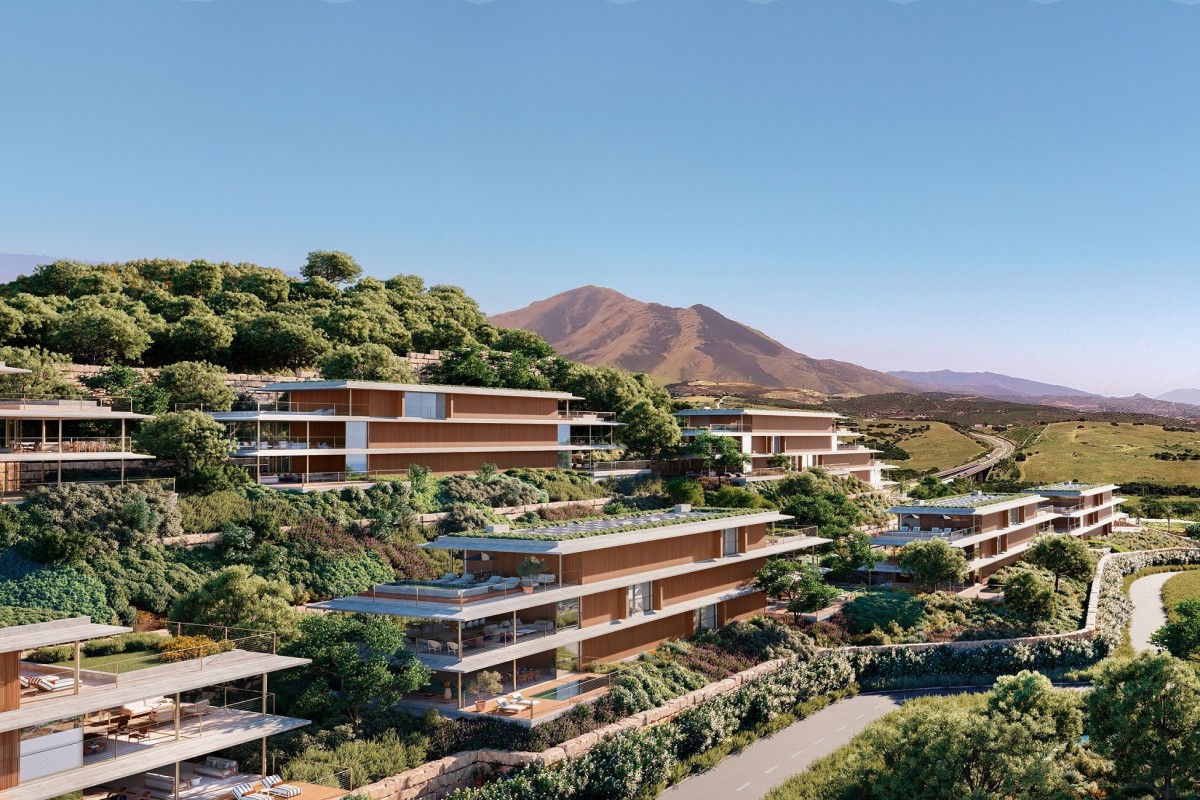
Marbella's Golden Mile: The Costa del Sol's luxury branded projects — Design Hills Dolce&Gabbana, EPIC Marbella by Fendi Casa, Armani Residences Marbella — are attracting Polish family offices seeking entry into the most established European branded residence market. A €5 million branded residence in Marbella delivers 5–6% gross yield plus cultural prestige. Polish investors recognize this as a long-term hold for generational wealth.
-
Madrid's emerging luxury sector: Fewer branded projects exist in Madrid than on the coast, but a new generation of ultra-luxury residential developments targeting European capital is emerging. Polish wealth, seeking both coastal and urban diversification, is entering this market.
-
Barcelona waterfront: Similar to Madrid, Barcelona's ultra-luxury residential supply is expanding. Polish investors with €10 million+ to deploy are using Barcelona as a secondary anchor to Spanish real estate exposure.
Portugal — The Secondary Growth Market
Portugal's rise in branded residences is directly correlated with Polish capital inflow. The country's regulatory stability, favorable tax treatment, and tourism boom have made Lisbon and the Algarve increasingly attractive.
Karl Lagerfeld Residences in Lisbon (10 apartments, starting €2.5 million) and Viceroy & Mandarin Oriental branded projects in the Algarve represent the entry point for Polish investors seeking slightly lower entry prices than Spanish alternatives while maintaining strong brand integrity.
Dubai — The Diversification Play
High-net-worth Polish investors with portfolios exceeding €20 million are using Dubai branded residences as a third anchor. The UAE's real estate transparency, strong legal frameworks, and favorable capital treatment have made Dubai's branded residence market (now valued at $13.6 billion) attractive to Polish family offices seeking global diversification beyond Europe.
The Polish Investor Profile: Who Is Buying Branded Residences?
Polish branded residence buyers fall into two distinct segments:
1. Entrepreneurs and Business Owners (€3M–€15M portfolio)
Owner-operators of manufacturing, technology, and services businesses represent the primary cohort. They are typically aged 45–65, have experienced 20+ years of business growth, and are now seeking to redeploy profits into real assets that offer both yield and capital preservation.
Their motivation is straightforward: diversify away from business concentration risk, generate passive income in euros, and create a luxury lifestyle asset in a Mediterranean market without the management burden of owning a standalone villa.
A €5 million apartment in Marbella's Armani Residences represents roughly 15–25% of their portfolio — large enough to be meaningful, small enough to remain comfortably diversified. The built-in hospitality management (concierge, maintenance, optional rental) appeals directly to entrepreneurs fatigued by hands-on asset management.
2. Family Offices and Inherited Wealth (€15M–€100M+ portfolio)
Second and third-generation Polish industrial and trading families are deploying capital across European real estate. They view branded residences not as speculation but as institutional-quality holdings — comparable to owning equity in a Ritz-Carlton or Four Seasons brand through real estate rather than through stock.
For these investors, a portfolio allocation to branded residences across Spain (€20M), Portugal (€10M), and Dubai (€15M) makes strategic sense. Each position is large enough to command attention from the developer but small enough to remain liquid within an institutional portfolio.
The Psychology of the Polish Branded Residence Buyer
Understanding Polish investor decision-making requires understanding European capital psychology post-2022.
The conflict in Ukraine crystallized something for Polish wealth: Western European real estate, particularly in countries like Spain and Portugal, is not just an investment. It is insurance. It is a fallback position. It is the asset you can liquidate, move, transfer, or leverage in a moment of crisis.
Branded residences, being attached to global hotel management companies and transparent international pricing, offer a layer of institutional stability that a privately-owned villa or an off-brand luxury apartment does not. The Four Seasons brand, the Ritz-Carlton brand, the Giorgio Armani brand — these are recognized globally and function as a form of financial infrastructure.
For Polish investors, buying a branded residence is buying into the brand's global operating system, not just a physical asset.
The Numbers: What Polish Investors Are Actually Paying
Current market data from Marbella, Lisbon, and Dubai:
The typical Polish branded residence buyer enters at €3 million to €7 million — a sweet spot where the asset generates meaningful income without consuming an excessive share of the investor's portfolio.
The Challenges: What Polish Investors Need to Know
Despite the momentum, Polish investors face specific barriers to entry in the branded residence market:
1. Currency Risk
Although most branded residences are priced in euros, the initial capital commitment from Poland requires conversion from złoty to euro. Currency fluctuations can add 5–10% to the effective cost depending on timing. Sophisticated Polish investors mitigate this through forward currency contracts or by accepting the currency risk as a long-term hedge.
2. Complexity of International Transactions
Purchasing a Spanish or Portuguese branded residence requires navigating multiple layers: Spanish property law, NIE (fiscal identification), Spanish tax residency rules, Portuguese ownership structures. Most Polish investors use Spanish or Portuguese legal advisors, which adds cost (€5,000–€15,000 per transaction) but is essential.
3. Rental Management and Taxation
Polish investors often intend to generate rental income through the developer's hospitality management agreement. However, rental income tax treatment varies significantly by country and by ownership structure (individual vs. company). Proper tax planning is critical and requires specialist advice.
4. Liquidity
Branded residences, while increasingly liquid, are not as tradeable as stocks or bonds. A 3–5 year hold is the realistic minimum for capital appreciation realization. Polish investors with shorter time horizons should avoid this asset class.
The Future: Why This Trend Is Structural, Not Cyclical
Three factors suggest Polish branded residence investment will accelerate through 2027 and beyond:
1. Generational Wealth Transfer
Poland's industrial boom of the 1990s–2010s is now translating into generational wealth transfer. Second and third-generation wealth holders are more comfortable with international real estate deployment than their predecessors.
2. EU Capital Mobility
The EU's freedom of capital movement means Polish investors can deploy capital across European markets with minimal friction. Branded residences, being standardized and internationally priced, fit neatly into this cross-border capital allocation framework.
3. Yield Compression in Poland
As domestic Polish real estate yields compress (due to price appreciation outpacing rental growth), capital will seek higher-yielding markets. Mediterranean branded residences, at 5–7% gross yield, will remain attractive relative to domestic alternatives.
The Bottom Line
Polish capital flowing to European branded residences represents a rational reallocation decision: entrepreneurs and family offices deploying capital from a high-tax, lower-yield domestic market into higher-yielding, more diversified international assets with institutional backing.
The trend is transparent in the data: Polish buyers are now among the top ten foreign buyer groups in Spain and Portugal. Within those cohorts, branded residences command a disproportionate share of capital — suggesting that Polish investors specifically view branded residences as the optimal expression of Mediterranean real estate investment in 2026.
For developers, this means a reliable new source of capital. For Polish investors, it means access to a growing global asset class. For branded residence markets in Spain, Portugal, and Dubai, it means structural demand growth.
This is not a real estate bubble. This is capital finding its natural level.
Branded Homes is the leading insights and marketplace for branded residences in Europe and beyond. For advisory, market analysis, and property sourcing services, contact us at branded.homes.
Written by
branded.homes Research Team
Market Intelligence & Advisory