Brickell's Branded Boom: How Miami's Financial District Became America's Hottest Luxury Address
branded.homes Research Team
Market Intelligence & Advisory
Share
St. Regis, Cipriani, Mandarin Oriental, Nobu, Dolce & Gabbana and Baccarat — all within two square miles. How Miami's financial district became America's densest branded residence market, and what it means for buyers in 2026.
Why Brickell, and Why Now
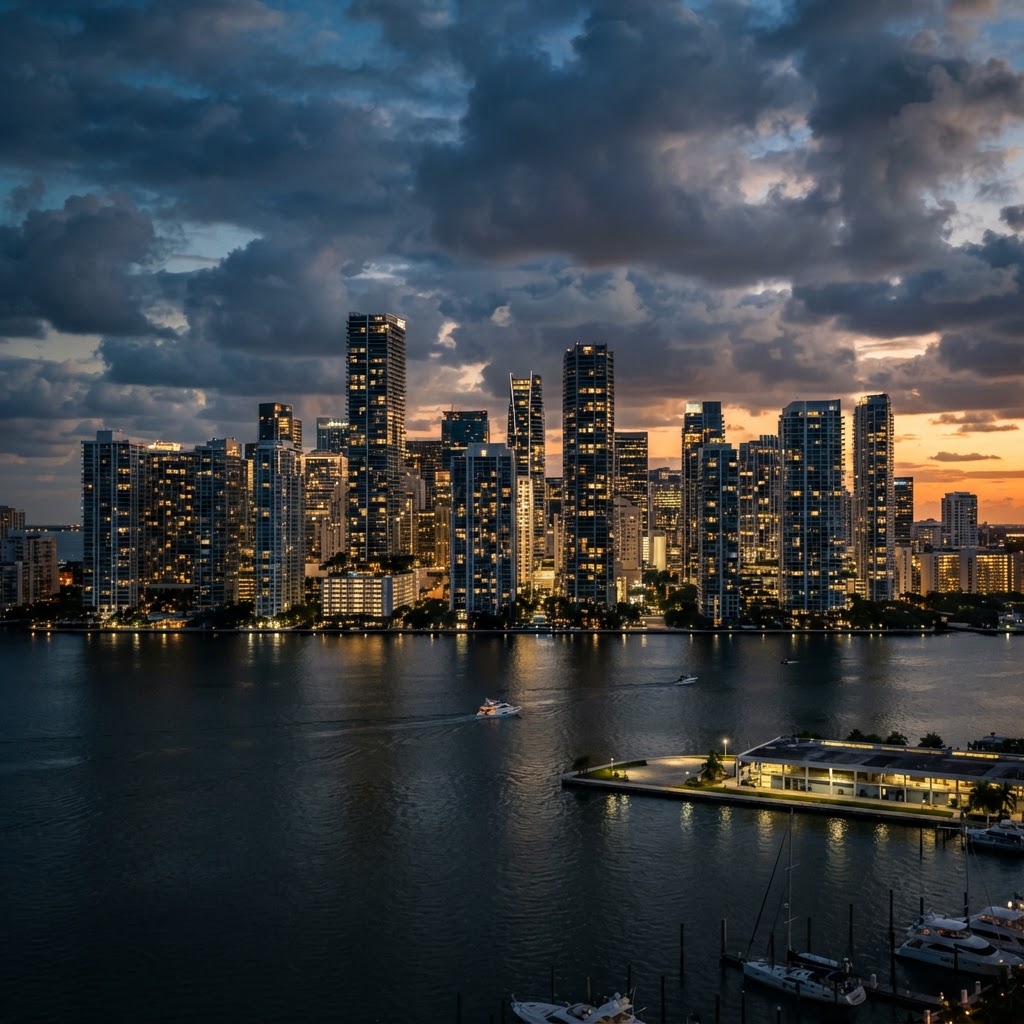
Drive down Brickell Avenue today and the skyline is a forest of cranes. In a stretch of roughly two square miles between the Miami River and the southern end of Biscayne Bay, more than half a billion dollars of branded residential construction is either underway or in final pre-construction sales. No other neighbourhood in the United States has simultaneously attracted St. Regis, Cipriani, Mandarin Oriental, Nobu, Dolce & Gabbana, and Baccarat within walking distance of each other.
Miami ranks second globally for branded residences — behind only Dubai — with 48 completed projects and over 55 in the pipeline. But it is Brickell specifically that has become the epicentre. Globally, branded residences rose to 910 in 2025, up from just 323 a decade earlier. Brickell's contribution to that growth is outsized, with an estimated 2,794 new ultra-luxury condo units expected to arrive between 2026 and 2030 — roughly a 25% expansion of everything the neighbourhood has built since 2000, compressed into five years.
The Projects Defining the Boom
Five branded towers anchor the current Brickell pipeline, each with a distinct identity:
The Residences at Mandarin Oriental, Miami — Brickell Key
Swire Properties' final development on the exclusive man-made island of Brickell Key, designed by Kohn Pedersen Fox. The two-tower project will deliver 228 residences in the South Tower and 70 residences plus a new Mandarin Oriental hotel in the North Tower. Starting prices begin around $4.3 million, with two duplex penthouses selling for $49.9 million each in early 2026 — setting a record of $6,300 per square foot for mainland Miami condominiums. Delivery is targeted for 2030.
The St. Regis Residences, Miami — Brickell
152 bayfront residences with the brand's signature Butler Service, priced from approximately $4 million to $35 million for penthouses. Delivery is targeted for 2027. For buyers familiar with St. Regis from Asia or the Middle East, the address carries immediate global recognition.
Cipriani Residences Miami
Anchoring the corridor's Italian-hospitality offering with 397 residences and starting prices from approximately $1.6 million — the most accessible entry point in the current branded pipeline. Completion is marketed for 2027. The product is positioned around Cipriani's dining culture and social programming: the residence is only half the offering, the other half is how the building performs on an ordinary night when you want a table, a car, or a discreet solution.
619 Brickell — Nobu Residences
A Nobu-branded luxury residential tower designed by Foster + Partners on the Brickell riverfront, with an official launch in March 2026. Starting prices from approximately $2.8 million, with delivery targeted for 2028. The tower brings Robert De Niro's hospitality brand into Miami's financial district for the first time.
888 Brickell — Dolce & Gabbana Residences
A 90-story, 1,049-foot condominium hotel developed by JDS Development Group with interiors by Dolce & Gabbana. The 259 residences are marketed from approximately $2.5 million to $35 million, with delivery targeted for 2027. This is one of the tallest residential towers planned in the southeastern United States, and it brings high fashion into a corridor already dense with hospitality brands.
Also in the Pipeline
Baccarat Residences Miami is planned with 360 units, and Kempinski Residences Miami Design District — the European luxury hotel brand's first U.S. residential project — sits at the northern edge of the corridor with starting prices around $3.7 million. The Residences at 1428 Brickell, a 70-story tower with 189 residences, distinguishes itself through sustainability: its façade integrates 500 photovoltaic windows expected to generate approximately 170 MWh of clean energy annually.
What It Costs — and the Pricing Gap That Matters
Brickell condo prices range broadly from $700 to $2,500 per square foot, but the branded pre-construction pipeline is setting benchmarks north of $2,100 per square foot. Meanwhile, some of Brickell's stronger existing luxury buildings trade around $1,100 per square foot. That is a gap approaching $1,000 per square foot between established product and unbuilt branded towers.
The broader market tells a more nuanced story. The average Q1 2026 closing price in Brickell settled around $666 per square foot, with early 2026 closings landing approximately 13% below early 2025 levels. Average days on market increased to 107 in 2025, pushing inventory to roughly 19 months of supply. Rather than signalling a downturn, these metrics reflect a classic market rebalancing — and they hand meaningful negotiating power to resale buyers for the first time in years.
Cash buyers continue to dominate, accounting for nearly 60% of all closed Brickell condo sales in 2025. Many are actively weighing the lifestyle benefits of immediate occupancy in an established luxury residence against paying a 50–100% premium for a project that will not deliver for several years.
Who Is Buying
International buyers account for approximately 52% of Miami new-construction condo purchases, spanning 73 countries, with notable demand from Latin America. For globally mobile buyers, a recognisable brand name and a tightly run operating standard function as a form of risk management — the brand is shorthand for consistency, discretion, and service quality that travels with them across markets.
The buyer profile splits into distinct segments. Full-time residents value Brickell's walkability, year-round restaurant and retail ecosystem, and Metromover access to downtown and Wynwood. Second-home and international buyers prioritise the lock-and-leave security of hotel-grade operations: staffing, concierge, and the confidence that the building will function like a well-run hotel without feeling like one. Trophy-hunting investors target penthouses and signature stacks that behave like a separate market entirely.
What Brickell Does Not Offer
This is not a beach market. Brickell does not offer direct oceanfront living, and views depend entirely on floor and orientation. Buyers who prioritise beach access or oceanfront exposure should compare Brickell against Sunny Isles Beach, Coconut Grove, or the Bal Harbour and Miami Beach corridor. Each delivers a materially different daily lifestyle:
- Brickell — walkable urban density, branded hotel service, and a recognisable financial-district address.
- Coconut Grove — neighbourhood character, bayfront access, and a tree-lined environment with less commercial density.
- Sunny Isles — direct coastal frontage with branded living designed as a complete lifestyle system, from in-residence vehicle lifts to phased twin-tower delivery.
- Edgewater — bayfront positioning at a lower price point, with proximity to Wynwood and the Design District.
The Land Play Behind the Towers
The long-term signal may be in the land itself. A Brickell land assemblage priced around $520 million with 485 feet of bay frontage has been reported, signalling deep institutional interest in future redevelopment. Even for buyers who never intend to sell, land values influence the competitive landscape for future inventory and, by extension, resale liquidity.
How to Underwrite a Brickell Branded Residence
For sophisticated buyers evaluating the 2026–2028 delivery pipeline, four principles stand out:
Treat delivery dates as targets, not guarantees. South Florida construction timelines can shift due to financing, permitting, labour, or materials timing. Focus on the contract structure and the developer's execution record.
Scrutinise the operating budget. In branded buildings, you are paying for the service model as much as the asset. Ask what services are included versus à la carte, how privacy is protected while still delivering responsiveness, and how consistently standards hold across high and low seasons.
Understand price realism. Marketing ranges vary materially by line, view, floor height, and finish packages. The true price is discovered at the intersection of scarcity units and buyer preference. Penthouses and full-floor layouts behave like a separate market.
Take a long view on scarcity. Brickell's branded pipeline is large, but oceanfront-adjacent bayfront sites with trophy potential remain finite. The question is not just what is being built today, but what cannot be replicated tomorrow.
The Bottom Line
Brickell's branded boom is not a single project or a single brand — it is a structural transformation. A neighbourhood that was once purely a financial district is becoming the densest concentration of branded luxury living in the Americas. With Mandarin Oriental, St. Regis, Cipriani, Nobu, Dolce & Gabbana, and Baccarat all betting on the same two square miles, the question for buyers is no longer whether Brickell has arrived on the global branded residences map. It has. The question is which project, at which price point, and at which point in the delivery cycle represents the right entry.
Written by
branded.homes Research Team
Market Intelligence & Advisory
Related Articles
Continue exploring market insights