
Types of Branded Residences: Hotel Groups, Fashion Houses and Car Makers Compared
branded.homes Editorial
Market Intelligence
Share
A hotel group, a couture house and a car maker do three different jobs inside a branded residence. A guide to the six families of brand, the three management models behind them, and what each means for fees, rental income and resale.
Put three branded residences side by side and the brochures look alike: a name above the door, a spa in the basement, a concierge who answers before the second ring. Look at the contracts behind them and they are three different products. In one, a hotel company employs the staff, runs the spa and markets the rental pool. In another, the same company has licensed its name to a building it will never operate. In a third, a fashion house has supplied the interiors, a logo and a launch party, and the developer keeps the keys.
That difference, not the logo, is what determines whether a residence behaves like a hotel asset or like a very well-dressed apartment. It shapes the annual service charge, whether there is rental income to speak of, what happens when the brand's agreement expires, and how the building is priced fifteen years from now. This guide sets out the six families of brand active in the sector, the three management models underneath them, and how to tell which one you are actually buying.
Six families of brand
Hospitality groups
The original and still the largest category: Four Seasons, Aman, Ritz-Carlton, St. Regis, Rosewood, Fairmont, Six Senses, One&Only, Regent, Dorchester Collection. These brands already employ thousands of people whose job is to run buildings, so extending that machinery to private homes is an operational step rather than a marketing one. Their residences tend to sit beside or above a hotel, share its kitchens, spa and engineering team, and can be placed in a rental programme the hotel already knows how to sell.

Fashion and couture houses
Armani, Dolce&Gabbana, Fendi, Versace, Missoni, Roberto Cavalli, Karl Lagerfeld, Elie Saab. These houses bring a visual language and an enormous amount of earned attention, but almost none of them employ hotel staff. What they license is design authority: the palette, the materials, the furniture, the way a lobby smells. Marbella has become the densest concentration of this type in Europe, with Armani/Casa, Dolce&Gabbana, Fendi Casa, Versace Home and Karl Lagerfeld all attached to projects within a short drive of each other.
Automotive and industrial design
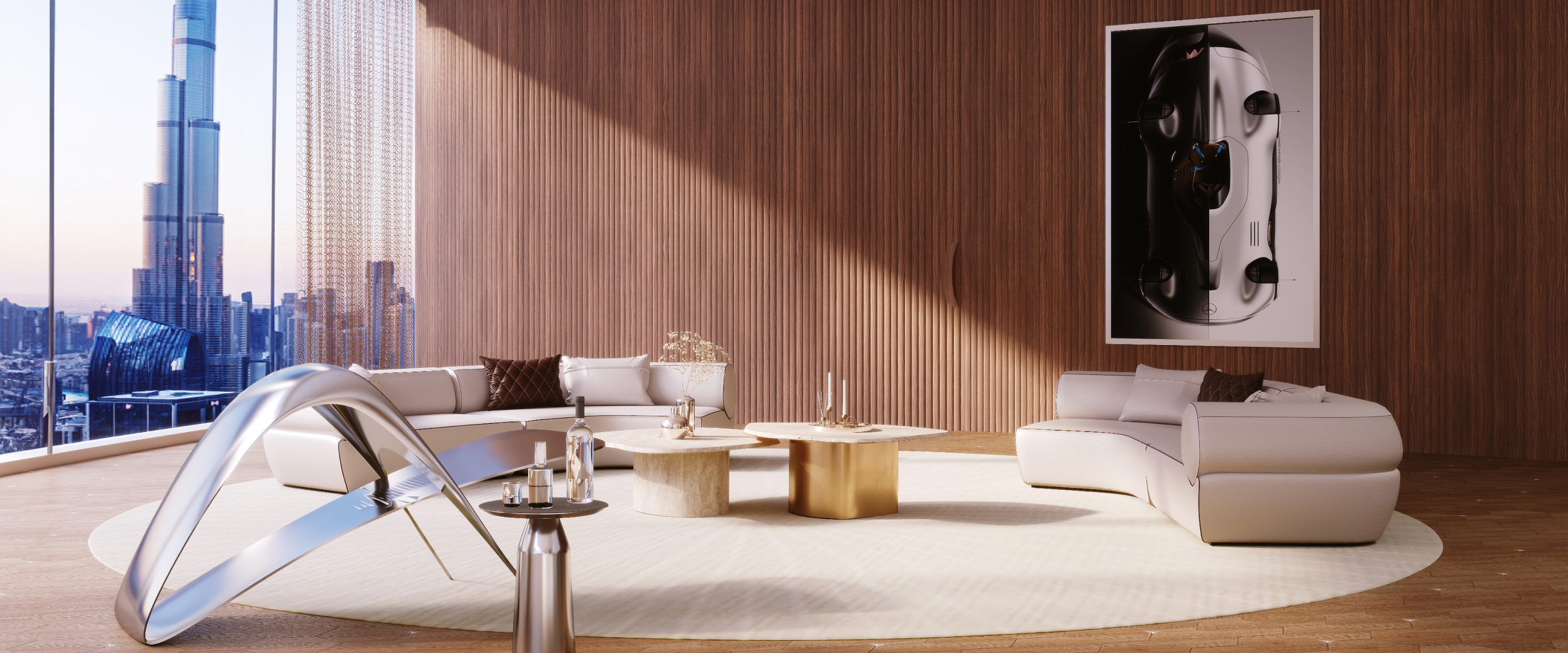
Porsche Design, Aston Martin, Bentley, Bugatti, Mercedes-Benz, Pininfarina, Lamborghini. The car marques have found a second life in real estate because their design codes translate unusually well into buildings: precision engineering, leather, machined metal, a tower shaped like a moving object. Dubai has absorbed most of this supply, often through developers who specialise in licensed branding. Bentley Home and Lamborghini are the softer end of the category, applied to interiors and materials rather than to the whole building's identity.

Jewellery and watchmaking
Bvlgari, de GRISOGONO, Jacob & Co, Chopard. The smallest and most concentrated family. Bvlgari is the model case because it is also a hotel operator through its partnership with Marriott, so its Dubai residences come with genuine hospitality behind the gold. Most others are pure licensing: a jeweller's signature applied to lobbies, facades and finish schedules, marketed on scarcity and craft.

Furniture and interior design
Fendi Casa, Bentley Home, Missoni Home, Armani/Casa when used as a supplier rather than a house brand, plus design studios such as Pininfarina and Lissoni. This is the category closest to ordinary high-end development: the brand provides furniture, finishes and a mood board, and the developer delivers the building. It is also where the words "by" and "in collaboration with" do the most work in the marketing, and where a buyer should read the specification schedule rather than the press release.
Wellness, lifestyle and club brands
Six Senses, SHA, SIRO, Soho House-style membership clubs, Banyan Tree's Angsana. These brands sell a behaviour rather than a logo: longevity programmes, sleep, nutrition, a members' floor. They are the fastest-growing family in Europe because they give a project a reason to be used outside August, and they usually come attached to an operating business that has to keep the standards up.

Model one: the brand operates the building
Here the brand signs a management agreement with the developer or the owners' association and runs the property: staffing, housekeeping, maintenance, front desk, sometimes the rental pool. The hotel company typically does not own the real estate, and it usually does not guarantee returns; what it guarantees is a standard, enforced through its own inspections and its right to walk away.
This is the model that supports the premium the sector is known for, and the reason the premium is misapplied so often. A hotel-operated residence can be priced a quarter to a third above comparable non-branded stock because the buyer is purchasing an operating business's discipline, not a plaque.
Model two: the brand licenses, someone else operates
A middle path, common in markets with strong local operators: the brand licenses its name and standards to the building, while a third-party manager delivers the service. The result can be excellent, but the brand's financial exposure is limited to its reputation, not to your service charge. When the licensing agreement lapses, the building keeps the hardware and loses the name.
Model three: the brand is a signature
The majority of fashion, automotive and jewellery projects sit here. The house supplies design direction, approves materials, lends its archive and turns up for the opening. It does not employ a concierge, does not run a spa and does not market rentals. What you buy is a building with a distinctive, professionally art-directed interior and a name that will help it stand out in a competitive market, plus the risk that the name adds marketing value without adding operational value.
| Model | Who runs it | What the brand supplies | Rental & rebrand risk |
|---|---|---|---|
| Hotel-operated | Hotel group, under a management agreement | Staff, standards, spa, distribution | Rental: usually. Risk: low |
| Licensed operator | Third-party manager to brand standards | Standards, training, audit | Rental: sometimes. Risk: moderate |
| Design signature | Developer or owners' association | Design, materials, marketing | Rental: rarely. Risk: high |
What the difference costs every year
Service charges track the model, not the postcode. A design-signature building carries the cost of a well-run condominium: security, gardens, pools, insurance, a sinking fund. A hotel-operated tower carries all of that plus a front desk, housekeeping, a spa with therapists, engineering cover and the operator's management fee, which is typically calculated as a percentage of revenue with an incentive layer on top.
Owners in hotel-operated schemes also fund brand standards: periodic refurbishment to keep the property at the level the brand can put its name on. That reserve is the reason these buildings look current a decade after delivery, and the reason the annual bill is higher than the brochure's headline figure suggests.
The four clauses that decide the investment
- Who signs the management agreement, and for how long. Terms of ten to twenty years, with renewal options, are normal. Ask what happens on termination and whether the owners' association has any say.
- How the rental programme works. Whether participation is optional, how revenue is split between owner and operator, who carries the cost of marketing and whether there is a guaranteed minimum. A branded home without a functioning rental pool is a second home with a nice lobby.
- What the brand standards oblige you to spend. Refurbishment cycles, furniture replacement, and whether you must use the operator's approved contractors.
- What happens if the brand leaves. A rebrand is not only a signage problem: it changes nightly rates, rental demand and, historically, resale values.
Which type suits which buyer
If the objective is income and the property will be used a few weeks a year, hotel-operated is the only model with a realistic rental engine behind it. If the objective is a distinctive home in a market where every new tower looks the same, a fashion or automotive signature delivers exactly that, at a lower annual cost and with no illusion of hotel service. If the objective is long-term capital preservation in a market with strong local management, a licensed operator can offer most of the brand's discipline at a lower fee.
The one thing not to do is pay a hotel-brand premium for a design-signature product, which happens more often than the brochures would suggest. The test is simple: ask who employs the person who will answer the phone in year three, and read the management agreement that names them.
Where each type is concentrated
Europe's fashion signature cluster is Marbella, where Armani/Casa, Dolce&Gabbana, Fendi Casa, Versace Home and Karl Lagerfeld sit within a few kilometres. Dubai owns the automotive and jewellery end, with Mercedes-Benz Places, Bugatti, Jacob & Co and de GRISOGONO all attached to towers on or near the canal and the Palm. Hotel-operated supply dominates where hotel demand is deepest and year-round: the Algarve, the Riviera Maya, Montenegro's Boka Bay, Porto Heli and, increasingly, Comporta.


The full inventory across all three models is in our property collection, filterable by brand and market, with the hotel-operated projects in Spain and Dubai grouped separately. For the underlying history of the asset class, read what branded residences actually are; for the numbers behind the premium, our ROI comparison sets branded and non-branded stock side by side.
Market Intelligence
Get the next briefing by email.
branded.homes
The Branded Residences Investor Guide 2026
Free PDF · 16 pages
The Branded Residences Investor Guide 2026
Premium property with hotel-grade living, explained for investors — the premium, the markets, the due diligence, in one free guide.
Instant download. No spam.
Written by
branded.homes Editorial
Market Intelligence
Related Projects
Branded residences connected to this article

Related Articles
Continue exploring market insights
Subscribe to briefings.
Quarterly analysis of branded residence markets, new project launches and exclusive pricing data. No spam, ever.
Unsubscribe anytime. We respect your privacy.