
Longevity in Branded Residences: The Next Premium Tier, and Spain's First Real Test
branded.homes Editorial
Market Intelligence
Share
Longevity has moved from the spa menu to the operating agreement: a clinic, a licence and a doctor on site. Global numbers explain why, and Oakmond Marbella, now under construction with 28 private residences, is where Spain finds out whether buyers pay for medicine rather than amenities.
For twenty years the wellness pitch in branded residences was amenity-led: a spa in the basement, a lap pool, a gym with a view and a “wellness concierge” folded into the service charge. The pitch now arriving is different in kind. It does not sell facilities. It sells access to a medical institution: diagnostics, biomarkers, a physician who holds your file, and a programme that runs for years rather than a week.
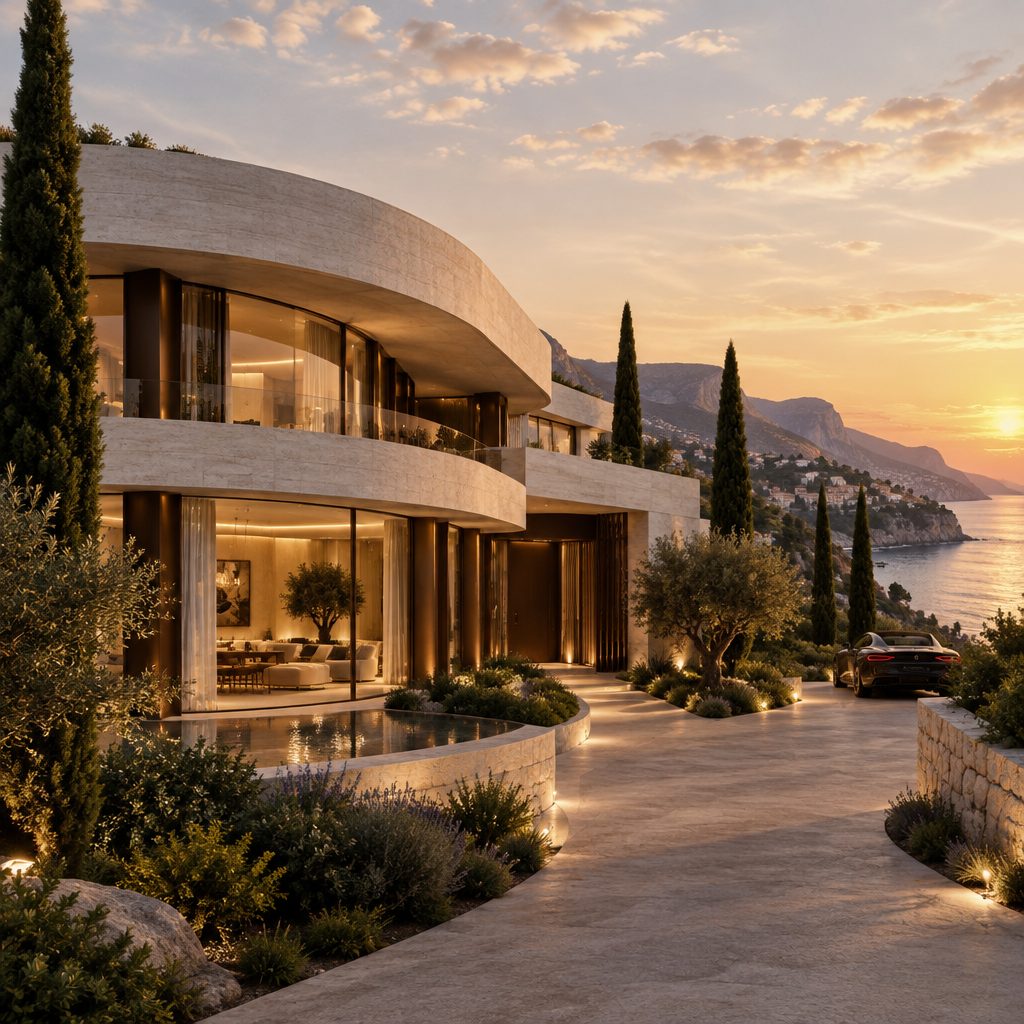
That shift has a market behind it, a completed first generation abroad, and now a Spanish building site. On 21 October Marbella laid the first stone of Oakmond, a €260 million longevity clinic resort with 28 private residences on the site of the Incosol, the 1973 medical spa that effectively invented medicalised hospitality in Spain. It is scheduled to open in the third quarter of 2029. Whether Spain’s first clinical longevity residence also becomes its first proof of concept depends on several things that are not in the renderings.
The market underneath
Wellness real estate has been the fastest-growing segment of the global wellness economy for six consecutive years. The Global Wellness Institute values it at €784 billion in 2025, growing at 23.6% a year since 2019, roughly double the pace of mental wellness, the next fastest segment, and forecasts €1.6 trillion by 2030. In the single year 2024 to 2025 the sector grew 23% while global construction grew 3%. Europe accounts for €137 billion of the total, forecast to reach €184 billion by 2030, and Spain is among the world’s fastest-growing large markets in the GWI’s ranking, at roughly 46% annual growth since 2019.
Branded residences sit inside those figures at the top of the price curve. Knight Frank’s 2026 global survey covers close to 1,800 live and pipeline schemes across more than 90 countries and over 200 brands, with the pipeline projected to grow by more than 60% over the next five years. Its most quoted structural finding is that non-hotel brands — fashion, automotive, design — will approach 40% of supply by 2028.
Longevity is the axis that finding misses. A longevity-branded residence is neither hotel-led nor design-led; it is institution-led. The name that decides what you are buying is not the designer who chose the stone, but the clinic that holds the licence and employs the doctors.
Four things calling themselves longevity
Almost every new luxury scheme on the Costas now uses the word. The contract, not the brochure, separates four quite different products.
| Model | Who runs the medical side | What the owner actually buys | Principal risk |
|---|---|---|---|
| Clinical longevity resort Oakmond Marbella, SHA Residences Mexico, Clinique La Prairie at AMAALA | The clinic operator, under its own licence and management agreement | Contractual access to diagnostics, a physician-led programme and year-round medical infrastructure | The clinic is a separate business: if it underperforms, the residence loses its reason to exist |
| Wellness-hospitality brand Six Senses, SIRO, Angsana | Nobody. Programming, sleep and nutrition specialists, no clinical licence | Superior wellness operations, trained staff, a rental pool that works | Good product, but replicable by any hotel group; the premium erodes as the category fills |
| Urban wellness membership THE WELL Miami, Coconut Grove | A medical and wellness team, sold as membership rather than residence service | A membership attached to the building, renewable and priced annually | Membership economics drive the asset, not the other way around |
| Amenity-level wellness most of the market | Nobody | A spa, a gym and a word in the marketing | Priced as wellness, valued as ordinary prime stock |
The clinical tier is small. Oakmond will be Spain’s first; Clinique La Prairie’s AMAALA project on Saudi Arabia’s Red Sea coast is the most ambitious anywhere, built around a “Longevity Plaza” and four pillars of medicine, nutrition, movement and wellbeing; SHA’s Mexican residences are the only completed example of the model at scale. The wellness-hospitality tier is far larger and far better understood: Six Senses at Comporta, SIRO at Boka Place in Montenegro, and in Spain the Angsana at Real de La Quinta, where Banyan Tree’s health and wellness programming arrives with a 90-room hotel and the El Lago Club rather than a clinic.

Why the clinical tier is a different asset
Four things change when medicine moves into the building.
Capital and staff. A clinic is not a spa with better lighting. It needs imaging and laboratory equipment, treatment rooms built to healthcare standards, and a roster of physicians, nurses, physiotherapists and nutritionists whose salaries do not flex with season. In Spain it also needs authorisation as a healthcare centre from the regional health authority, professional liability cover, and a data-protection regime built for health records rather than hotel guest profiles.
Two profit and loss accounts. The residences and the clinic are separate businesses that share a lobby. Owners buy access; the clinic sells programmes, memberships and room nights. That separation is the whole investment case, and the whole problem: the residence’s service charge has to fund the shared infrastructure, while the clinic’s viability depends on occupancy that the residences alone will not supply.
Seasonality. Marbella works for eight or nine months a year at full intensity. A clinic does not. It needs residents and medical guests in February, which is precisely why the longevity model pushes owners towards membership and repeat programmes rather than a rental pool calibrated on summer weeks.
A new kind of exit risk. When a hotel brand leaves a building, the building loses polish. When a clinic operator leaves, the building loses its licence, its doctors and its central claim. Everything therefore hangs on the operator agreement: its term, its renewal mechanics, the performance thresholds that let either side walk, and what the residences are contractually guaranteed if the clinic changes hands.
The completed case: SHA in Mexico
The only place the model has been tested end to end is Costa Mujeres, north of Cancún. SHA Residences Mexico opened in January 2024 as a residential enclave attached to a SHA medical and wellness clinic, with two- to four-bedroom homes from around €1.8 million, circadian lighting, water purification, hydrotherapy circuits and a private beachfront club. It is the residential arm of a brand whose reputation was built on clinical programmes in Alicante, and which in 2026 added a structured Advanced Longevity programme to its medical offer.
What Mexico proves is narrower than the marketing suggests, and more useful. It proves that a clinic can anchor a residential product and that buyers will accept a premium for access to a medical institution rather than a spa. It does not yet prove resale depth, because the stock is barely two years old, and it does not prove that a clinic-dependent service charge stays stable through a full cycle. Both remain open questions, and both are what Spain will now have to answer for itself.

Spain: what the numbers say
Knight Frank ranks Spain among the world’s leading markets for future branded residential development, and identifies Marbella and the Costa del Sol as the lifestyle-led European destinations absorbing that pipeline. Two of its 2026 figures matter more than the rest: at the very top of the market Marbella now achieves residential values comparable with Madrid, and average transaction prices on the coast are still rising faster than anywhere comparable in Spain.
| Indicator | 2026 reading |
|---|---|
| Marbella luxury prime range | €15,400–26,000 per m² |
| Madrid prime range | €19,300–26,000 per m² |
| Average completed transaction, Marbella–Benahavís–Estepona, H1 2026 | €4,366 per m², up 15.5% year on year |
| Global branded residence pipeline growth, five years | More than 60% |
| Non-hotel brands’ share of new supply by 2028 | Approaching 40% |
| Homes owned by the average UHNW individual | 3.8, against 2.9 a decade ago |
The brand roster behind those prices is already the broadest in Europe outside London. Marbella has Fendi Casa, Dolce&Gabbana, Karl Lagerfeld, Armani/Casa, Bentley Home and Automobili Lamborghini on the Golden Mile alone, alongside Four Seasons, Waldorf Astoria, Angsana and Destination by Hyatt, with Missoni, St. Regis and Fairmont further west. Madrid has built an urban market around the Four Seasons, Banyan Tree’s Padilla Residences and SLS Infantas.
Almost none of that depth is clinical. The Spanish pipeline has become exceptionally good at design, at hospitality and at clubhouses. What it has not had, until now, is a residential address where the operative brand is a medical institution. That is the gap Oakmond is being built into, and it is the one place in the Spanish market where pricing is genuinely undiscovered.
Oakmond, and why the site is the story
The Incosol opened in 1973 and spent three decades as Europe’s reference for medical check-up tourism, counting Grace Kelly, Salvador Dalí and Princess Diana among its guests before debt closed it in 2012. Ilanga Capital acquired it in 2022 and closed financing earlier this year: a €145 million facility from Goldman Sachs Alternatives inside a total execution budget of around €260 million, with overall committed capital above €400 million.
The programme is 140 hotel rooms and 28 private residences across a plot of more than 53,000 m², positioned by the developer as a vertically integrated precision health ecosystem: diagnostics, personalised intervention, continuous monitoring and data-driven clinical intelligence, rather than a hotel with a treatment menu. Read the construction report and the project background for the detail.
Two things make the site unusually consequential. First, it sits directly beside Four Seasons Private Residences Marbella, the 27-hectare Richard Meier scheme whose first completions are expected in 2029 — the same year Oakmond opens. East Marbella is therefore about to hold, within a few hundred metres, one of the world’s strongest hotel operators and Spain’s first clinical longevity residence, side by side and directly comparable on price. Second, 28 residences is a deliberately small number. Scarcity protects the launch; it also means the asset class in Spain will be defined by a very thin sample.
Five questions to answer before buying into longevity
1. Who holds the clinic licence, and who employs the doctors? If the answer is the developer rather than a named clinical operator, the medical capability is a staffing contract, not an institution.
2. What exactly does the residence entitle you to? Access in perpetuity, a fixed annual allowance of diagnostic hours, or a discount on programmes? The difference between those three on a ten-year horizon is larger than the difference between two brands.
3. What is the clinic’s own business plan? Members, medical tourists, hotel guests, local patients. A clinic that depends on residential owners is a service charge in disguise; one with an external patient base is a business that can survive a slow property market.
4. What is in the service charge, and for how long? Medical access, staffing and equipment replacement have no precedent in Spanish residential budgets. Ask for a ten-year model, not a year-one estimate.
5. What happens if the clinic closes or changes operator? Look for the clause that protects the residence, and check the brand agreement’s term against your intended holding period. This is the question that will decide resale values in 2035.
Outlook, 2027 to 2031
Marbella becomes Spain’s clinical cluster. Oakmond will not be alone for long. The Costa del Sol now has the density of private capital, medical tourism infrastructure and branded residential buyers to support two or three clinical schemes, and the second generation will copy Oakmond’s underwriting rather than its architecture: fewer residences, a named clinic, and a membership layer.
Madrid stays a hotel market. Urban longevity is harder to underwrite than the brochures imply. Clinics need volume and qualified staff, and a capital city already has hospitals. Madrid’s branded growth will keep coming from hotel operators and city-centre hospitality, with wellness as an amenity — THE WELL’s membership model is the realistic urban expression, not a tower of clinical residences.
The Balearics and Portugal are the nearest competitors. Mallorca and Ibiza can support a small clinical resort with a handful of residences at a higher price point, and the Algarve and Comporta already have wellness-native brands and lower entry prices. Spain’s advantage is a first mover in Marbella and a clinic heritage nobody else in Europe can claim; its risk is that the buyer discovers Lisbon first.
Branded stock splits into two valuation tiers. This is the structural consequence, and it is already visible in the way buyers now ask about management agreements rather than logos. Institution-led residences — a clinic, a licence, a physician of record — will be re-rated against a market that has learned to price what sits behind the name. The projects that used “wellness” as copy will be discounted accordingly.
What would change the thesis is on the operator side rather than the buyer side: clinical groups concluding that residential attachments carry more liability than they are worth, tightening of European rules on health data and medical marketing, or the medical staffing costs that make the clinic uneconomic below a certain number of beds. None of those are visible yet. All of them are worth watching, because in a longevity residence the clinic is not an amenity. It is the asset.
The wider picture is in our 2026 market analysis and the Costa del Sol pipeline; the operating models behind wellness and clinical branding are set out in wellness branded residences and types of branded residences. Every project referenced here is in the Spanish collection.
Market Intelligence
Get the next briefing by email.
branded.homes
The Branded Residences Investor Guide 2026
Free PDF · 16 pages
The Branded Residences Investor Guide 2026
Premium property with hotel-grade living, explained for investors — the premium, the markets, the due diligence, in one free guide.
Instant download. No spam.
Written by
branded.homes Editorial
Market Intelligence
Projects in Spain
Branded residences connected to this article


Related Articles
Continue exploring market insights
Subscribe to briefings.
Quarterly analysis of branded residence markets, new project launches and exclusive pricing data. No spam, ever.
Unsubscribe anytime. We respect your privacy.